Thursday 13 April 2023


Thursday 6 April 2023
Saturday 20 November 2021
A New Chapter of Betrayal Is Being Written in Our History [repost]

Reproduced
from KI Media
A
New Chapter of Betrayal Is Being Written in Our History
26 June 2012
Op-Ed by
Khmer Academy
'No stability, social development or economic progress can justify the loss of national sovereignty and territorial integrity. To believe otherwise is to succumb to treason, a misdeed that my conscience, and I trust yours too, can neither accept nor allow.'
OUR country
is presently going through another dark moment of its history as we witness a
new chapter of betrayal is being written. The authority has recently admitted
that several villages, including the birth place of H.E. Heng Samrin, the
current Chairman of the National Assembly, will be ceded as part of the Eastern
border demarcation process. This is totally in contrast to what it has said,
and unjustly prosecuted those who disagreed, for years that not a single
millimeter of our lands would be lost.
The
authority, with its justification, wants us to believe that due to the
different accuracies found in maps with different scales, some adjustments
along the border have to be made, thus unavoidably resulting in some villages
on both sides being swapped. If that is really the case, why so far only
villages on our side but none on the other side have been identified to the
public? It is incomprehensible and unacceptable that the alleged errors and map
inaccuracies only occur on our side. How can a village where the Chairman of
the National Assembly and his siblings before him were born, raised and farmed
belong to another country? Note that on the 6th of August 1966, Hanoi declared:
"Thlok Trach village [is] on Cambodian territory". Why is it no
longer the case?
Several
other central questions with regard to the entire border demarcation process
remain unanswered. The complete lack of transparency and public consultation
since the beginning of the process only confirms the suspicion by some and
allegation by others that our lands are being ceded to the neighbor, illegally
and deliberately.
It is
evident that the Eastern border demarcation constitutes an application of the
so-called 1982 and 1985 treaties which were signed when our country was
officially recognized by the U.N. as under occupation. As such, the entire
demarcation and the treaties which form its basis are flawed; they are not only
in violation of our sovereignty and constitution, but also in contrary to the
known international laws.
'It is a mistake of historical proportions to assume that border conflicts can be resolved through a one-time land concession.'
Wednesday 3 June 2020
Wednesday 18 March 2020
Tuesday 24 December 2019
Monday 16 December 2019
Wednesday 25 September 2019
Who is Khom? and Who is Khmer?
Is anybody know who is “Khom”? Who are they? and Where do they live? Can anybody tell me? Sometimes ago I felt really embarrassed that I did not know that who is “KHOM” and what they are. But don’t you wanna know why I felt like that? and what it has to do with me personally? Before I answer to that question above, here below are what is in Thailand history refer to as Khom

 These couple pieces of papers are quoted from Thai history books, even though I have not yet found the first hand source, which show what “KHORM” alphabets are, which the Siamese refer to. The point is in Thai history. They believe that their scripts were derived from the Khom nation, and the worst is that the Thais do not believe that a “KHOM” is a Khmer.


 These couple pieces of papers are quoted from Thai history books, even though I have not yet found the first hand source, which show what “KHORM” alphabets are, which the Siamese refer to. The point is in Thai history. They believe that their scripts were derived from the Khom nation, and the worst is that the Thais do not believe that a “KHOM” is a Khmer.
Let's go back to my question above. The reason I personally felt embarrassed because I am a Cambodian or a Khmer, and I do not know that there is such as word “Khom” in Khmer history, especially a Khom is a word which the Thais refer to the Khmer people in the ancient time.
There is nothing wrong with the ideas above, since in this 21st century most of the country promote human rights and freedom of expression is just one of those rights. However, given false information is what most of us think as completely unacceptable. Thai government has all the right to think and to say as well as the Thai citizens but as long as it is not affecting the other nation or people. The ideas that Thai citizens believe that Khom is not Khmer, the ancient Khmer, is what we Cambodians can not tolerate since it affects the Cambodian history, nationality, origin, and reputation.
A Thai law professor named Sompong Sucharitkul who spoke with ABC Radio Australia on Monday, August 04, 2008 has claimed that a Khom is not a Khmer. He said: "The current generation of Kampucheans are not the same as the Khom, the old Khmer, that may have been successor in title but it’s long far removed from their ancestry.” It seems like Thailand has long been rewriting Cambodian history for their Thai generations, and this kind of belief seemed to be deep rooted in the minds of every single Thai citizen and children who have been taught the wrong history about their neighbors history as what the Thai law professor above has himself been taught.
There is nothing wrong with the ideas above, since in this 21st century most of the country promote human rights and freedom of expression is just one of those rights. However, given false information is what most of us think as completely unacceptable. Thai government has all the right to think and to say as well as the Thai citizens but as long as it is not affecting the other nation or people. The ideas that Thai citizens believe that Khom is not Khmer, the ancient Khmer, is what we Cambodians can not tolerate since it affects the Cambodian history, nationality, origin, and reputation.
A Thai law professor named Sompong Sucharitkul who spoke with ABC Radio Australia on Monday, August 04, 2008 has claimed that a Khom is not a Khmer. He said: "The current generation of Kampucheans are not the same as the Khom, the old Khmer, that may have been successor in title but it’s long far removed from their ancestry.” It seems like Thailand has long been rewriting Cambodian history for their Thai generations, and this kind of belief seemed to be deep rooted in the minds of every single Thai citizen and children who have been taught the wrong history about their neighbors history as what the Thai law professor above has himself been taught.
បើមហាក្សត្រសព្វថ្ងៃ មិនអាចជួយរាស្ត្របានទេ គួរតែដាក់រាជ្យទៅ កុំធ្វើជាស្តេចល្ខោន ឲ្យ ហ៊ុន សែន ប្រើ ដើម្បីលម្អរបបតិរច្ឆានរបស់គាត់។
If the current King cannot help alleviate the sufferings of the Cambodian people under the current dictatorship he should abdicate the throne so as to stop endorsing the destructive and inhumane Hun Sen regime.
Sam Rainsy
Friday 9 November 2018
Sunday 15 July 2018
Sunday 3 June 2018
Tuesday 2 January 2018
បទសម្ភាសន៍ VOA៖ មន្ត្រីគណបក្សជំទាស់ប្រតិកម្មទៅនឹងការបោះបង្គោលព្រំដែនលេខ៣០ថាមិនធានាបូរណភាពទឹកដីខ្មែរ
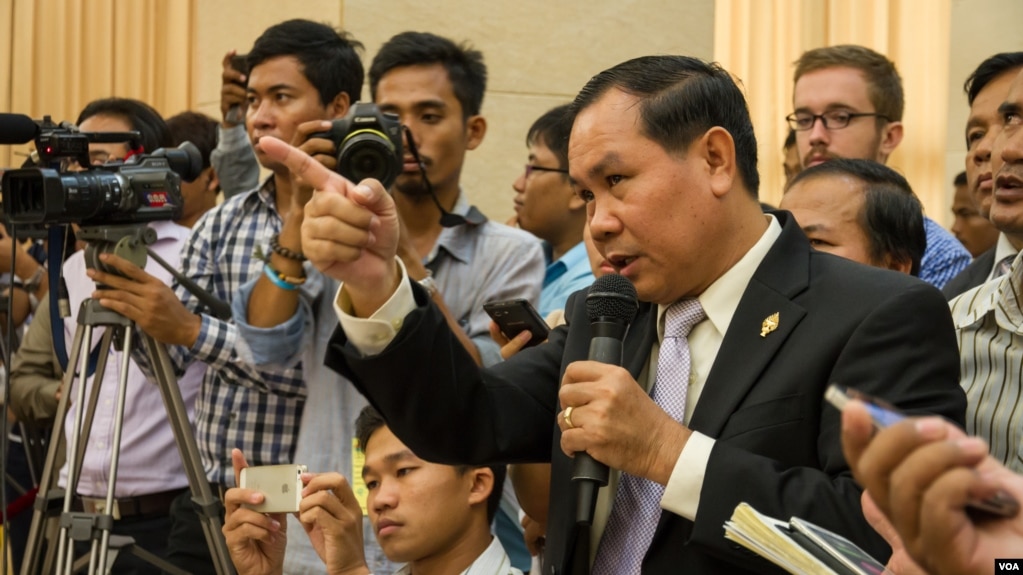
លោកថ្លែងថា កម្ពុជាអាចការពារទឹកដីបានគឺត្រូវលុបចោលសិទ្ធិសញ្ញាទសវត្សរ៍១៩៨០ ដែលកម្ពុជាស្ថិតនៅជាប្រទេសក្រោមការត្រួតត្រារបស់វៀតណាម ហើយប្រើប្រាស់ផែនទីបារាំងវិញ។
វ៉ាស៊ីនតោន —
កំណត់និពន្ធ៖ តំណាងរាស្ត្រគណបក្សសង្គ្រោះជាតិដែលមានជំនាញផ្នែកព្រំដែនបាននិយាយថាការបោះបង្គោលព្រំដែនថ្មីៗរវាងកម្ពុជានិងវៀតណាម នៅខេត្តរតនគិរី មិនបានធានាដល់បូរណភាពទឹកដីកម្ពុជាទេ។ លោក សុខ ខេមរា នៃ VOA ក្នុងរដ្ឋធានីវ៉ាស៊ីនតោន បានជួបសម្ភាសជាមួយលោក អ៊ុំ សំអាន ដែលកំពុងបំពេញទស្សនកិច្ចនៅសហរដ្ឋអាមេរិក។ លោកថ្លែងថា កម្ពុជាអាចការពារទឹកដីបានគឺត្រូវលុបចោលសិទ្ធិសញ្ញាទសវត្សរ៍១៩៨០ ដែលកម្ពុជាស្ថិតនៅជាប្រទេសក្រោមការត្រួតត្រារបស់វៀតណាម ហើយប្រើប្រាស់ផែនទីបារាំងវិញ។
Wednesday 25 October 2017
Saturday 7 October 2017
Friday 29 September 2017
ពលរដ្ឋស្វាយរៀងថា អាជ្ញាធរបោះតម្រុយបង្គោលព្រំដែនចូលដីស្រែពលរដ្ឋច្រើនហិកតារ
ដោយ អាស៊ីសេរី
2017-09-28

រូបភាពបង្គោលព្រំដែនលេខ១៩៨ នៅស្រុកចន្ទ្រា ខែត្រស្វាយរៀង កាលពីថ្ងៃទី២៣ ខែកញ្ញា ឆ្នាំ២០១៧។
Photo Provided
ពលរដ្ឋរស់នៅឃុំចន្ទ្រា ស្រុកចន្ទ្រា ខែត្រស្វាយរៀងចាត់ទុកការបោះតម្រុយព្រំដែនលេខ ១៩៨ និង ១៩៩ កាលពីពេលថ្មីៗនេះថា ចូលដីខ្មែររាប់រយហិកតារ ដែលភាគច្រើនជាដីស្រែពលរដ្ឋនៅតំបន់នោះ។ អ្នកភូមិមួយចំនួនដែលបាត់បង់ដីស្រែ ហាក់ខ្លាចរអាក្នុងការប្ដឹងករណីនេះទៅអាជ្ញាធររដ្ឋាភិបាលឲ្យជួយដោះស្រាយ ព្រោះបារម្ភខ្លាចអាជ្ញាធរចោទថា ជាមនុស្សរបស់គណបក្សប្រឆាំង។
Thursday 14 September 2017
Hun Sen on verge of ruining his legacy

Prime Minister Hun Sen addresses a crowd of garment workers on Phnom Penh’s Veng Sreng Boulevard yesterday, invoking the deadly crackdown on wage riots that took place there in 2014. Facebook
Thu, 14 September 2017
Post Staff
One would think that, after being in power for three decades, Cambodian Prime Minister Hun Sen would feel more secure about his position. Sadly, this is not the case. The strongman has a weak temperament, and no mandate from the people is enough to put him at ease. As he prepares for a general election next year, he has decided to go after his political challengers and critics.
Wednesday 13 September 2017
Friday 8 September 2017
Monday 4 September 2017
Sunday 13 August 2017
Saturday 5 August 2017
Sam Rainsy's interview with VOA សម រង្ស៊ី សម្ភាសន៍ជាមួយ VOA
https://www.facebook.com/rainsy.sam.5/videos/1545594115497316/
Sam Rainsy

០២ សីហា ២០១៧ / 02 August 2017
យុវជនជាច្រើន បានសរសេរប្រាប់ខ្ញុំថា ៖ "ទោះជាគេ បានដករូបថតលោកពូ យ៉ាងណាក៏ដោយ តែខ្ញុំបានឆ្លាក់រូបលោកពូ ក្នុងដួងចិត្តរបស់ខ្ញុំរួចហើយ"។ (បទសម្ភាសន៍ជាមួយសម្លេងសហរដ្ឋអាមេរិក ថ្ងៃ ០១ សីហា ២០១៧)
Many youth have written to me: "Even though they are removing your photo from public places, I have already carved it in my heart and mind." (Interview with Voice of America, August 1, 2017).

Sunday 23 July 2017
Wednesday 14 June 2017
Post-local election will be a tough fight for CNRP in next year general election

By Khmer Wathanakam
www.khmerwathanak.blogspot.com
The most intense local election competition has done with a result of unfavorable for both leading parties-- CNRP and CPP-- though CPP can manage to maintain about 70 per cent of their commune chiefs or 1,165 communes and sangkats, CNRP has wrestled to regain more than 400 commune chiefs from the CPP. And the popular votes CNRP got 45 per cent while CPP received 48 per cent and the other 10 small parties received the combined popular votes 7 per cent according to unofficial data from NGO. However, the NEC did not reveal the number of seats each party received yet. But they expect The CPP will receive at least 6,000 seats and CNRP will receive over 5,000. At the same time both parties have claimed their popular votes have increased from previous election in 2013. nonetheless according to NGO, CPP still maintain their votes from 2013: about 3.3 million votes while CNRP have increased their vote to 3.15 million votes, closer to CPP. Now we have seen that the gap of popular votes between the two major parties get closer from term to term even if CPP still hold power firmly in both local and national levels. How can CNRP try to break this iceberg, meaning to close the gap of popular votes and win over the CPP which has ruled the country nearly 40 years. If election is hold freely and fairly as if in the Western democracies, CNRP would win landslide since 2013, but the political environment in Cambodia is very tight and dangerous. CNRP, the largest opposition in the country has been persecuted severely from the ruling party, CPP: their leader Sam Rainsy was forced in exile in the third times and many CNRP's activists and human right defenders were jailed without reason. Thus, how can CNRP manage to win the national election in 2018 without a fair playing field?
The CPP still has its ill will to destroy its rival, CNRP, at all cost. In the next couple months, there will be more campaigns to weaken and destroy CNRP plotted by the CPP. Especially, its president Kem Sokha who had numerous pending cases against him in Hun Sen's control court. And the new commune chiefs and council members from CNRP will face more obstacles to run their communes too. The CPP may not provide enough fund to develop any commune run by CNRP, and they face with unfair accusation of corruption, crime, and any activity that the CPP can manipulate.
Saturday 6 May 2017
Leaked emails from Deputy PM Sok An's office
The following email was leaked to Khmerization from someone named Sokan Sok, which is the name of one of Deputy PM Sok An's sons, from exactly the same email address as Sokan Sok's Gmail email (sokan.sok@gmail.com) seen below.
--------------------------------------------------------------------------------------
---------- Forwarded message ----------
From: ceo <ceo@nagacorp.com>
Date: Fri, Dec 26, 2014 at 1:45 PM
Subject: greetings
To: sheila@sheilacopps.ca
Cc: JDV <venecia@pldtdsl.net>, Mushahid Hussain <mushahid.hussain@gmail.com>, sokan.sok@gmail.com, eypantla@gmail.com
------------------------------------------------------------------------------------
---------- Forwarded message ----------
From: Ly Tayseng <tayseng@hbs.com.kh>
Date: Wed, Feb 18, 2009 at 3:28 PM
Subject: Final Version of MOA
To: manith hun <manithhun@hotmail.com>, sopheak nika <sopheakmen@yahoo.com.au>, sokan.sok@gmail.com, sengnhak@lypgroup.com
--------------------------------------------------------------------------------------
---------- Forwarded message ----------
From: ceo <ceo@nagacorp.com>
Date: Fri, Dec 26, 2014 at 1:45 PM
Subject: greetings
To: sheila@sheilacopps.ca
Cc: JDV <venecia@pldtdsl.net>, Mushahid Hussain <mushahid.hussain@gmail.com>, sokan.sok@gmail.com, eypantla@gmail.com
Excellency
Hope this note of mine will see Excellency in good health and high spirits and would like to take this opportunity to send Seasons Greetings to you and your family!
I am entrusted by Excellency De Venecia to have been chosen at the last meeting in Mexico city as the Chairman of the ICAPP-COPPAL Business Council (ICBC) . Having been put in this position of reasonability and prestige by many supporters , I am a great believer that ICBC should be active and very much alive to work truly towards the very purpose of its existence; for this purpose, someone with status and reputation working on full time basis should be engaged. We name him as the President/CEO ( ICBC, Asia) , whose services/employment shall be paid by my office and shall be assisted & supported by a group of individuals, including analysts and economists the secretariat of which shall be in turn be guided by an international PR Agency like Hill & Knowlton ( incidentally the PR agency of our group)
The President/.CEO of the business council shall be responsible for cementing the relationship of the business communities of Asia and Latin America by cooperating and collaborating with each other to create win-win smart partnership for the better economic benefits of the respective regions. The business council shall periodically and as often as practicable , promote initiatives ( like organizing seminars with Forbes Asia Conference, Channel News Asia Conferences and other regional conferences ) , dialogues and meetings to bring the relevant parties to work closer together with objectives to create awareness & opportunities, form joint ventures and partnerships . The candidate is expected to travel extensively and network with governmental , political & business leaders, and individual parties to further the Business Council's vision, mission and long term relationships that shall meet the Business Council's objectives.
Instinctively , I remember that Excellency great dedication to the cause of ICAPP and proximity to Latin American countries shall be the ideal person of choice to fill in this position as President, ICBC Asia. I shall be most grateful if I can move this subject matter a little bit forwards if Excellency express an interest to serve this very noble cause of crating a regional powerhouse which can further perpetuate the legacy of ICAPP. I suggest that the cabinet/office of the Chairman of the Asian leg of ICBC shall be based in Phnom Penh , which shall work closely with office/cabinet of the Vice Chairman of ICAPP HE DPM Sok An here in Phnom Penh; proximity of Phnom Penh to East Asia and South East Asia is definitely an advantage.
Thanks for your kindness / best regards
Thanks and regards
Lipkeong Chen ( Tan Sri Datuk Dr)
Chairman
ICBC Asia. \
---------- Forwarded message ----------
From: Ly Tayseng <tayseng@hbs.com.kh>
Date: Wed, Feb 18, 2009 at 3:28 PM
Subject: Final Version of MOA
To: manith hun <manithhun@hotmail.com>, sopheak nika <sopheakmen@yahoo.com.au>, sokan.sok@gmail.com, sengnhak@lypgroup.com
Dear All,
Please see attached final version of Memorandum for Chup (Cambodia) Co., Ltd. Please also note I have reviewed Cambodian law on commercial enterprise and made an informal consultation with the officer in charge of commercial registry of Ministry of Commerce to ensure that we can register this MOA without any further change. I found out that we need to change one provision regarding the appointment and removal of directors.
Leaked documents: Agreements between Sok An's daughter-in-law Cham Krana and Edwin Tan, a Singaporean national
The following email was leaked to Khmerization from someone named Sokan Sok, which is the name of one of Deputy PM Sok An's sons, from exactly the same email address as Sokan Sok's Gmail email (sokan.sok@gmail.com) seen below.
Note: Cham Krasna is Sokan Sok's wife and a daughter of Cham Prasidh, who was ex-Minister of Commerce. - Khmerization
-----------------------------------------------------------------------
Note: Cham Krasna is Sokan Sok's wife and a daughter of Cham Prasidh, who was ex-Minister of Commerce. - Khmerization
-----------------------------------------------------------------------
THIS SHARE SALE AND PURCHASE AGREEMENT (the “Agreement”) is made and entered into on (the “Agreement Date”) by and between the following parties:
(1) Mrs. Cham Krasna, a citizen of the Kingdom of Cambodia holding Cambodian ID number 010800343, with the current residential address at No. 20, Street 400, Village 9, Sangkat Boeung Keng Kang 1, Khan Chamkarmon, Phnom Penh, Cambodia; and Mrs. San Kiriny, a citizen of the Kingdom of Cambodia holding Cambodian ID number 100006057(01), with the current residential address at No. 755, Monivong Blvd, Sangkat Boeung Trorbek, Khan Chamkarmon, Phnom Penh, Cambodia, (together, herein referred to as the “Seller”);
(2) Mr. Tan Phong Guan, a citizen of the Republic of Singapore holding Singaporean Identity Card number S2003029A, with the current residential address at ………………. ; Mr. Vann Ky, a citizen of the Kingdom of Cambodia holding Cambodian ID number 010263268, with the current residential address at No. 33E2, Street 191, Village 3, Sangkat Tomnobtek, Khan Chamkarmon, Phnom Penh, Cambodia; and Mr. Tes Doem, a citizen of the Kingdom of Cambodia holding Cambodian ID number 020483607, with the current residential address at Village Trapaing Smach, Khum Mkak, Srok Ang Snuol, Kandal, Cambodia, (herein referred to as the “Purchaser”); and
(3) Angkor (Cambodia) International Co., Ltd, a private limited liability company duly incorporated and registered under the laws of the Kingdom of Cambodia with commercial registration no. Co. 8617/06P dated 07 April 2006, and having its registered principle address at No.2C, Street 120, Sangkat Phsar Thmey 2, Khan Daun Penh, Phnom Penh, the Kingdom of Cambodia, represented by Mrs. Cham Krasna (herein referred to as the “Company”).
The Seller, the Purchaser and the Company are collectively referred to herein as the “Parties” and individually as a “Party”.
(A) WHEREAS, in accordance with the Memorandum and Articles of Association of the Company dated 25 March 2016 (the “MOA”), the Company has a registered capital of KHR20,000,000 (twenty million Khmer Riels), or USD5,000 (five thousand US Dollars);
(B) WHEREAS, the Seller is currently a registered shareholder, holding 1,000 (one thousand) shares, representing 100% of the total common shares in the Company;
(C) WHEREAS, the Seller wishes to sell and transfer to the Purchaser and the Purchaser wishes to purchase and accept the transfer of 100% of the Common Shares, totaling 1,000 shares (the “Target Shares”), in the Company held by the Seller on the terms and conditions set out in this Agreement;
(D) WHEREAS, the Parties express their intention that, in giving effect to the Agreement, they will respect, and comply in full with, the provisions of applicable Cambodian law.
Leaked documents from Sok An's son: Investment in Cambodia - Confidential
The following email was leaked to Khmerization from someone named Sokan Sok, which is the name of one of Deputy PM Sok An's sons, from exactly the same email address as Sokan Sok's Gmail email (sokan.sok@gmail.com) seen below. - Khmerization
---------- Forwarded message ----------
From: Sokan Sok <sokan.sok@gmail.com>
Date: Thu, Aug 29, 2013 at 9:52 AM
Subject: Re: Investment in Cambodia - Confidential
To: Shane Stone <slselect@ozemail.com.au>
Dear Sir,
I will forward your enquiry accordingly and i look forward to further communication with you soon.
Thank you for your patience thus far and please allow us a few days to look into this matter.
I trust this email finds you well.
Best regards,
Kan
On Wed, Aug 28, 2013 at 6:57 AM, Shane Stone <slselect@ozemail.com.au> wrote:
Good morning Sok An, I have been trying to get the attached email through to your father. Would you be so kind to draw it to his attention.Regards.Honourable Shane L. Stone AC PGDK QC FAIM FAICD FACE F Fin | ChairmanMayfair (UK) in AustraliaAnne Street Partners Financial Group| Anne Street Partners Capital Limited | QNV Constructions
Chairman’s Office | 19th Floor, 333 Ann Street, Brisbane | Direct line: 07 3112 3330 | Fax: 07 3112 3301Head Office | 42 Siganto Drive, Helensvale QLD 4212 | PO Box 3435, Helensvale Town Centre QLD 4212 Tel: +61 7 5556 1200 | Fax: +61 7 5556 1245Executive Assistant | Mrs. Gloria KleidonBRISBANE | GOLD COAST | TOWNSVILLE | ADELAIDE | PERTH | NEWCASTLE | DARWIN | SYDNEY | MELBOURNE | LONDON | WASHINGTONP Consider the environment before printing this e-mailThis Email contains confidential information intended only for the use of the person named above. It may also be subject to legal professional privilege. Unauthorised use, copying or distribution of any part of the email or attachments is prohibited. If you have received this Email in error please notify us by telephone on +61 2 9252 5422 as soon as possible. The author has used its best efforts to ensure that this communication is free from computer viruses and other defects. However, it is your responsibility to scan or otherwise check this communication, and future communications from us, for viruses and other defects. We do not represent that this communication, or any future communication, is:
(a) free of viruses or other defects, nor
(b) received by you in the original form in which it was sent and without having been intercepted and/or tampered with by third parties,
and specifically disclaims liability to you and any other person for any loss or damage resulting (directly or indirectly) from the receipt or use of this communication (including any attachments).From: Shane Stone [mailto:slselect@ozemail.com.au]
Sent: Thursday, 15 August 2013 11:27 AM
To: 'an_sok@camnet.com.kh'
Subject: Investment in Cambodia - ConfidentialYour Excellency,Good morning. Congratulations on your re-election. I look forward to working with you in the time ahead in ICAPP.I mention some time back that I was in the process of developing some interests in Cambodia. I seek your advice and counsel as to how best to progress matters. My association is through the Transcontinental Group (TRG). I have had a long association with the principals of this company.
Conflict in East Sea (Hoang Sa, Truong Sa islands)

The Khmer Krom are ethnic Khmer who inhabit Kampuchea Krom, an area in southern Vietnam that was once part of the Khmer Empire. According to Vietnamese government figures (1999 census), there are 1,055,174 Khmer Krom in Vietnam. Other estimates vary considerably, with up to 7 million reported to Taylor (2014) in his The Khmer lands of Vietnam. In the late 1970s, the Khmer Rouge regime attacked Vietnam in an attempt to reconquer the areas which were formerly part of the Khmer Empire. In 1975-1977, the Khmer Rouge regime controlled An Giang and Kien Giang provinces. In 1979, this military adventure was a total disaster and precipitated the invasion of Cambodia by the Vietnamese army and subsequent downfall of the Khmer Rouge, with Vietnam occupying Cambodia.
Hoang Sa, Truong Sa islands were lost to China in 1974. Now, Vietnam government requests China to return. Cambodia wants to request Vietnam government to return the land of Khmer and Koh Tral (Phu Quoc Island)?
Read more on Khmer Krom in Wikipedia here: https://en.wikipedia.org/wiki/Khmer_Krom
Sunday 30 April 2017
Thanks to all Khmerization Administrators and Readers
I have abandoned Khmerization for a long time, not out of my choice but out of circumstances. I have been unwell for sometimes and I'm pretty pre-occupied with my works and family. For all these reasons, I'm very sorry that I have left it to some people to carry on the works of Khmerization for me. I wish to appeal to those who have the time and the dedication to carry on the works of Khmerization to step forward and continue the works.
I wish to thanks all those who dedicated their time and hard works to serve the Khmerization readers, particularly School of Vice, Manekseka Sangkum, Khmer Wathanakam and others. You have done such a fantastic job. For that, I thank you from the bottom of my heart.
I wish to inform readers that I am unable to return to manage Khmerization full time. However, I'll try to pop in from time to time. Thank you to all the dedicated Admins and readers.
Khmerization
Saturday 29 April 2017
Hun Chea - A Gun smuggler import guns from Thailand ហ៊ុន ជា ក្មួយប្រុសហ៊ុនសែន ជាអ្នករត់ពន្ធជួញដូរកាំភ្លើងខុសច្បាប់
Youtube:  https://www.youtube.com/watch?
ចង់ដឹងថា មានភស្តុតាងនិងសំលេងគ្
ហ៊ានចាត់ការហ៊ុនជាទេមើលទៅ? ក្នុងនោះក៍មានកាំភ្លើងម៉ាក Glock
ដែលដូចទៅនឹងកាំភ្លើងដែល ជួបសំលាប់ ប្រើបាញ់ សំលាប់លោគកើមឡី។
កាំភ្លើងទាំងនោះត្រូវបានលួចនាំ
Facebook:https://www.facebook.com/
តើហ៊ុនជា ជាអ្នកផ្តល់កាំភ្លើងអោយជួបសំលា
Hun Chea Facebook:https://www.facebook.com/
https://www.facebook.com/ហ៊ុន-
Hun Chea,one of Hun Sen's nephews is an arm dealer, he is working with
a police officer named Sokpheak Dey to illegally import guns from
Thailand.
Hun Chea ปืนผิดกฎหมายนำเข้
https://ssl.gstatic.com/ui/v1/icons/mail/images/cleardot.gif
https://www.youtube.com/watch?ចង់ដឹងថា មានភស្តុតាងនិងសំលេងគ្
ហ៊ានចាត់ការហ៊ុនជាទេមើលទៅ? ក្នុងនោះក៍មានកាំភ្លើងម៉ាក Glock
ដែលដូចទៅនឹងកាំភ្លើងដែល ជួបសំលាប់ ប្រើបាញ់ សំលាប់លោគកើមឡី។
កាំភ្លើងទាំងនោះត្រូវបានលួចនាំ
Facebook:
https://www.facebook.com/តើហ៊ុនជា ជាអ្នកផ្តល់កាំភ្លើងអោយជួបសំលា
Hun Chea Facebook:
https://www.facebook.com/https://www.facebook.com/ហ៊ុន-Hun Chea,one of Hun Sen's nephews is an arm dealer, he is working with
a police officer named Sokpheak Dey to illegally import guns from
Thailand.
Hun Chea ปืนผิดกฎหมายนำเข้
https://ssl.gstatic.com/ui/v1/icons/mail/images/cleardot.gif
Leaks documents about Hun Family: Hun Sen spent $584,415.07 US dollars to buy "like" on Facebook
Now you have more stories on your headlines
Samdech Hun Sen https://drive.google.com/open?

Samdech Hun Sen https://drive.google.com/open?
- In 2016 Samdech Hun Sen paid about $10,000 per day to promote his Facebook page. Mr. Duong Dara leads the Facebook team. Link: https://drive.google.com/file/
d/0ByqchITKdN6idE5Yd1QzeEIycEE /view - In 2015 Hun Sen told Dr. Sok Touch to keep secret of the border issue
- In 2014 Lim Keanhour paid his own money $175K for some works related to Hun Sen's base Toul Krawsang
- According to her record, she has about $26M deposited in many banks local and abroad, while Neth Savoeun has only around $20K in his bank account. https://drive.google.com/open?
id=0ByqchITKdN6iLWVRYmMyZUJlR1 E - Their 24 year olds daughter has $7M deposited at Sathapana Bank https://drive.google.com/open?
id=0ByqchITKdN6ieU41UElLZEFqcm c - They are all citizen of Saint Christopher and Nevis https://drive.google.com/open?
id=0ByqchITKdN6icmR5MjR2N3hBej Q
- Sok Puthyvuth illegal hunting https://drive.google.com/open?
id=0ByqchITKdN6iNWw0bVE5MFE5UV k - Sok Puthyvuth hand written letters to Hun Sen
Find more leaks at https://www.facebook.com/cambo
https://www.facebook.com/cambo
Hun Sen buy "like" on Facebook.
CNRP Proposed Vice-Presidents to Visit South Korea
CNRP vice-presidents-elect Pol Ham and Eng Chhay Eang are expected to arrive in South Korea on Thursday to meet migrant workers.
Mr. Ham and Mr. Chhay Eang, who were elected by the party as vice-presidents in February but have yet to get an all-clear by the Interior Ministry, planned to promote the party among Cambodian workers, said Yim Sinorn, head of CNRP’s Youth Wing in South Korea.

“Their primary purpose as members of parliaments is to come to see our citizens here, and to meet with supporters in order to provide them with the latest news and the party political stance,” he said.
Subscribe to:
Posts (Atom)